Store brands just hit a milestone worth paying attention to. Private label unit sales climbed to a record 23.8% market share in the first half of 2026, according to Circana data reported by Refrigerated & Frozen Foods, officially outperforming national brands in units sold for five of the last six months. What stands out to us isn’t just that private label is winning; it’s where it’s winning. Refrigerated was one of the standout categories, posting 1.5% unit growth over the past year. That’s a category where RLS thrives. And it tells us something about where cold storage demand is actually coming from right now.
The story behind the numbers is a familiar one. Shoppers haven’t stopped buying groceries, but they’ve gotten more careful about what fills their carts. National brands have leaned harder on price cuts and promotions to win people back, while others have raised prices to offset rising fuel, ingredient, and supply chain costs, as Bakery and Snacks reported. Store brands, meanwhile, have quietly kept gaining ground without needing to discount nearly as aggressively. For retailers, that’s a validation of years of investment in their own labels. For the companies producing and moving that product, it’s a different kind of signal entirely.
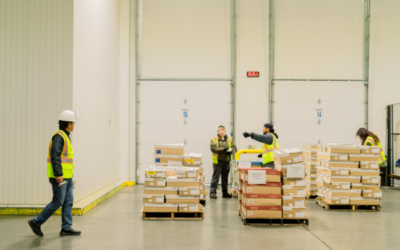
Here’s what a rising private label share really means: more volume running through retailer owned brands, co-packers, and smaller emerging food companies that don’t have the built in infrastructure a national brand has spent decades building. A retailer growing its store brand refrigerated line still needs somewhere for that product to sit at temperature, get picked, and ship on time. A co-packer producing for three different private label contracts doesn’t want to build three separate cold storage footprints to serve them. This is exactly the gap a 3PL is built to close.
We’ve seen this play out directly with customers we work with. Growth in refrigerated and frozen private label doesn’t usually arrive as one predictable, steady curve; it arrives in waves tied to new retailer contracts and shifting seasonal resets. A brand that wins a new store brand line this quarter might need double the cold storage capacity by next quarter, and that’s not something you solve by leasing a warehouse and hoping the contract renews. It’s something you solve with a partner who already has the space, the temperature control, and the network to flex with you.
That flexibility is also why the geography of a cold storage network matters more than it used to. Private label growth isn’t concentrated in one region. It’s happening at retailers and co-packers all over the country, which means a brand riding this wave needs storage and distribution that can meet product where it’s actually produced and where it’s actually sold. Running our facilities across New Jersey, Pennsylvania, and Utah isn’t just about square footage; it’s about being close enough to enough retail networks that a private label producer doesn’t have to choose between capacity and proximity.
There’s also a quieter opportunity in this data for brands willing to look at it honestly. If national brands are leaning on deeper discounting to compete and private label is gaining share without needing to, the companies producing private label product have real leverage right now, but only if their supply chain can keep up with the demand they’re winning. A great new retailer contract is only as good as your ability to fulfill it reliably. We’ve watched food companies lose momentum on a strong private label win simply because their fulfillment couldn’t scale fast enough to match the order volume the retailer expected.
None of this is really about private label versus national brands. It’s about recognizing that growth is showing up in refrigerated categories specifically, and that the companies capturing it need a cold chain partner who can scale with them rather than one they have to outgrow. That’s the conversation we have with co-packers and emerging brands more than almost any other right now: not “do you need a warehouse,” but “can your current setup actually grow at the pace this market is moving.”
If your private label or store brand volume is climbing and your storage footprint hasn’t caught up yet, it might be worth a conversation before the next contract renewal forces the issue. Contact our team of Cold Chain Experts today to get started.
ABOUT RLS LOGISTICS: Headquartered in Glassboro, NJ, RLS Logistics is a family-owned, third-party logistics provider specializing in value-added cold chain solutions, including LTL and FTL transportation, cold storage warehousing, and direct-to-consumer fulfillment. Founded in 1968, the company has been owned and managed by the Leo family for over 55 years and has grown into a leading integrated cold chain 3PL. For more information, visit https://www.rlslogistics.com/. Interested in joining one of the region’s leading temperature controlled logistics providers offering transportation, 3PL warehousing, packaging, and distribution services? Visit https://rlslogistics.com/logistics-careers.